Historical Calendars of the UK: Key Dates, Traditions, and Events That Shaped British Life

Britain’s calendar history does more than organize dates—it quietly shapes how people celebrate, work, travel, and even consume pop culture today. From Roman reforms to medieval traditions and the dramatic 1752 calendar shift. These changes continue to influence everything from tax deadlines to holiday timing and cultural storytelling.
What makes the British calendar especially fascinating is not just its evolution, but its persistence. Even after major reforms, older systems never fully disappeared. Instead, they blended into modern life, creating a layered sense of time that still defines British identity—and increasingly, how that identity is represented in media and global pop culture.
The Roman Roots Behind Britain's First Calendar
Long before the British Isles had a written calendar of their own, Rome's legendary king Romulus established the foundation of what would eventually shape Britain's timekeeping. His original calendar ran ten months, starting in March, and covered just 304 days, leaving winter entirely unaccounted for.
These pre-Julian calendar influences relied heavily on lunar based dating methods, where the kalends, nones, and ides each marked distinct moon phases. The College of Pontiffs publicly announced these days from Capitoline Hill, keeping civic life synchronized with the sky.
King Numa Pompilius later added January and February, bringing the year to twelve months. When Rome introduced its seven-day planetary week to Britain in the early 1st century AD, it replaced whatever unnamed day systems Britons had previously used. Julius Caesar reformed the Roman calendar in 46 BC, creating an entirely solar system influenced by the Egyptian calendar that would underpin timekeeping across the empire for centuries.
How Julius Caesar's 365-Day System Changed British Life
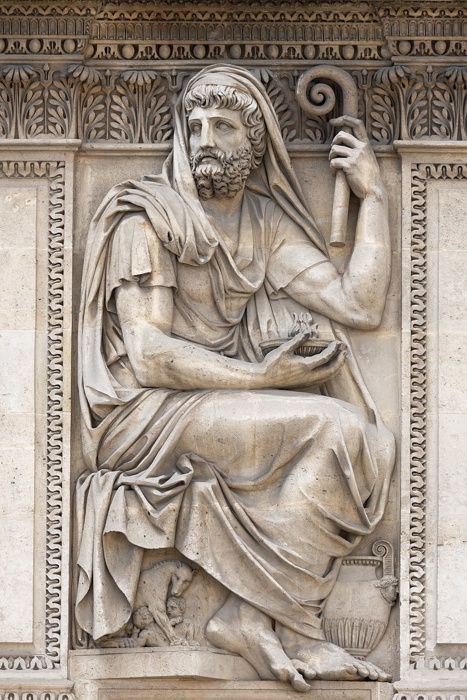
When Numa Pompilius added January and February to Rome's calendar, he laid the groundwork for the sweeping reform Julius Caesar would introduce centuries later. Caesar's 365-day system, introduced in 45 BC, reshaped how you'd have organized daily life across Roman-influenced Britain. It standardized civil administration reform, giving officials a reliable framework for taxation, record-keeping, and governance.
Farming traditions shifted too, as the calendar better aligned agricultural planning with seasonal cycles. However, the Julian calendar accumulated an 11-day drift by 1752, forcing Britain to skip days in September that year. That adjustment even pushed the financial year from 25th March to 6th April — a consequence you'd still recognize today in Britain's tax year.
Caesar's reform left a lasting, tangible mark on British life. To achieve this, Caesar enlisted the finest philosophers and mathematicians of the time, with Sosigenes of Alexandria widely regarded as the principal architect behind the reformed calendar's design.
Why Medieval Britain Celebrated New Year in March, Not January
If you lived in medieval Britain, you'd have rung in the New Year not on January 1st, but on March 25th — Lady Day, the Feast of the Annunciation. The cultural significance of Lady Day stemmed from its religious symbolism of March 25th, marking the Virgin Mary's conception of Jesus. This felt far more meaningful than pagan January celebrations.
| Period | New Year's Date | Reason |
| Pre-Norman England | December 25 / January 1 | Anglo-Saxon tradition |
| Mid-12th century–1752 | March 25 | Religious significance |
| Post-1752 Britain | January 1 | Gregorian calendar adoption |
From the mid-12th century until 1752, England officially observed this date. When Britain finally adopted the Gregorian calendar, it ended six centuries of Lady Day's reign as New Year's Day. The shift was made official on December 31, 1751, when Britain reluctantly abandoned March 25th in favour of January 1st, a change many Protestants had long resisted.
Regnal Years, Saints' Days, and How Medieval Britain Dated Documents
Medieval Britain's New Year confusion was just one layer of a far more complex dating puzzle. When you examine medieval charters, you'll find documents layered with regnal years, saints' days, and Julian calendar dates simultaneously.
Regnal years counted from a monarch's accession date, not their coronation. So "11th year Elizabeth" meant you'd need charts to pinpoint the exact Gregorian date. Dating practices in medieval charters often combined these regnal markers with saints' days like Michaelmas (29 September), giving scribes reliable fixed reference points.
Calendar alignment with exchequer years added another complication. Post-1300s, exchequer years aligned with regnal years using majority or start-date rules, as seen with Edward I's exchequer year labeled "35 Edward I" for 1306-07. Precision required knowing multiple systems at once. Until 1752, England had been using the Julian calendar, which ran eleven days behind the calendar used by most countries on the European Continent.
Design your own event calendar to share important dates with friends or your community.
The Gregorian Reform England Refused for 170 Years
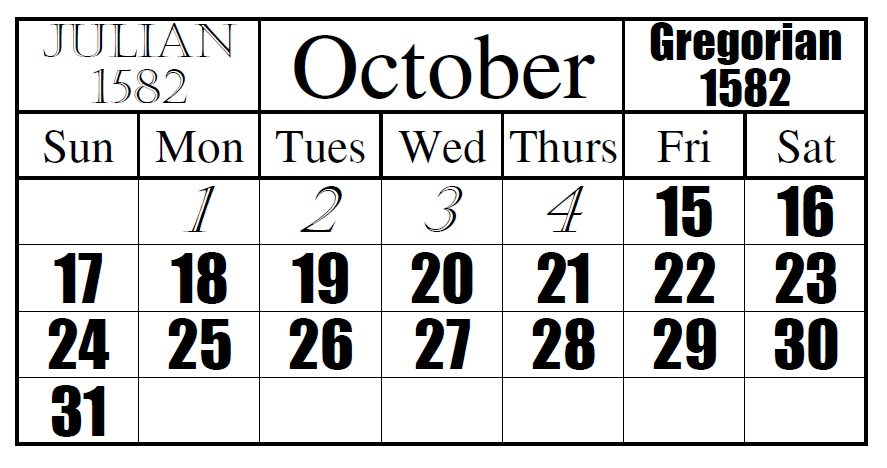
While much of Europe adopted the Gregorian calendar in 1582, Britain resisted for nearly 170 years. This delay was driven largely by religious and political tensions. The Gregorian reform originated from the Catholic Church, and Protestant England viewed it with suspicion. Adopting the calendar was seen not just as a scientific adjustment, but as a potential concession to papal authority.
As a result, Britain continued using the Julian calendar long after it had become outdated. Over time, this created a growing discrepancy between Britain and the rest of Europe. Dates no longer aligned, complicating trade, communication, and diplomacy. Eventually, practicality outweighed resistance.
By the mid-18th century, the need for synchronization became unavoidable, leading to one of the most dramatic calendar reforms in British history.
1752: The Year Britain Lost Eleven Days
The transition to the Gregorian calendar in 1752 remains one of the most famous moments in British timekeeping. To correct the accumulated discrepancy, Britain skipped eleven days in September. The calendar moved directly from September 2 to September 14, instantly aligning with the rest of Europe. This change was both practical and symbolic.
On a practical level, it corrected a long-standing error in the measurement of the solar year. On a cultural level, it disrupted everyday perception of time. Although widespread riots are largely considered exaggerated, the idea of “losing days” captured public imagination and remains part of British folklore. The reform also introduced lasting changes.
The New Year was officially moved to January 1, and the tax year was adjusted to account for the lost days—a shift that still defines the UK’s financial calendar today. This moment illustrates how abstract systems like calendars can have very real social and cultural consequences.
The Calendar and Modern British Life
Despite the shift to the Gregorian system, elements of older calendars continue to shape British life. The tax year, running from April 6 to April 5, is a direct result of adjustments made during and after the 1752 reform. This seemingly arbitrary structure reflects centuries-old decisions rather than modern logic.
Seasonal customs also preserve older timing. Events such as wassailing, harvest festivals, and regional celebrations often follow dates rooted in the Julian calendar rather than the modern one. These traditions act as living reminders of Britain’s layered approach to time.
This coexistence of old and new systems creates a unique cultural rhythm. Modern Britain operates within a standardized global calendar, but its traditions continue to echo older ways of measuring time.
Why Britain Was the Last Major Nation to Drop the Julian Calendar
While Catholic nations like France, Spain, and Portugal adopted the Gregorian calendar in 1582, Britain held out for another 170 years. Protestant suspicion of papal authority and religious aversion to calendar reform kept England locked in the past. Queen Elizabeth I outright rejected it due to its Catholic origins.
- Here's what kept Britain clinging to the Julian calendar:
- The Pope created the Gregorian calendar, making it politically toxic for Protestant England.
- Julian accumulated an 11-day drift by 1752, disrupting Easter calculations.
- Parliament finally acted through the Calendar (New Style) Act 1750.
- September 1752 saw 11 days vanish overnight, ending nearly two centuries of isolation.
You'd have been living by a calendar most of Europe had already abandoned. The Julian calendar's inability to accurately reflect the true length of the solar year was the core scientific flaw that ultimately made reform unavoidable, regardless of political and religious resistance.
Calendars in British Pop Culture and Media
The influence of Britain’s historical calendar extends beyond daily life into pop culture. Period dramas such as Downton Abbey, Bridgerton, and The Crown often reflect historical timekeeping systems, even when subtly. Seasonal events, social calendars, and the timing of major plot points are frequently shaped by historical rhythms rather than modern expectations.
Holiday specials and cultural programming also follow traditional timing. British television has long embraced seasonal storytelling, with Christmas and New Year episodes forming a central part of programming. These traditions are rooted in historical calendars that emphasized communal celebration and cyclical time. Even festivals and tourism are influenced by this legacy.
Visitors travel to experience events tied to specific dates, many of which have origins in pre-modern calendar systems. These experiences connect audiences not just to places, but to historical ways of organizing time. In this way, the calendar becomes part of storytelling itself—an invisible structure that shapes how narratives unfold.
Time, Identity, and Cultural Continuity
What makes Britain’s calendar history especially significant is its role in shaping identity. Timekeeping is often seen as purely functional, but in Britain, it carries cultural meaning. The persistence of older systems reflects a broader tendency to preserve tradition while adapting to change. This creates continuity.
Even as modern life accelerates and globalizes, elements of the past remain embedded in everyday routines. The calendar becomes a link between generations, connecting contemporary experiences to historical practices. This continuity also strengthens cultural identity. It allows Britain to maintain a sense of distinctiveness, even within a globalized world where systems are increasingly standardized.
Conclusion
Britain’s calendar history is more than a sequence of reforms—it is a story of adaptation, resistance, and continuity. From Roman foundations to medieval traditions and the dramatic changes of 1752, each phase has left its mark. These layers of time continue to influence how people live, celebrate, and engage with culture today.
What makes this history particularly powerful is its visibility. It appears in tax systems, festivals, television programming, and even tourism. It shapes not only how time is measured, but how it is experienced. In a world that often prioritizes efficiency and uniformity, Britain’s calendar stands as a reminder that time can also carry memory. And that memory continues to shape the present—quietly, consistently, and everywhere.
Related posts